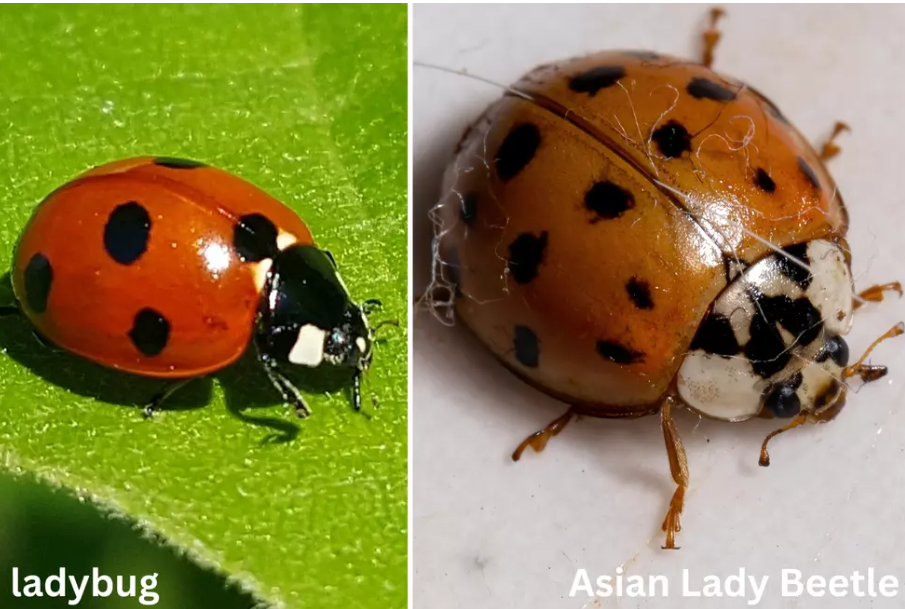
According to the University of Minnesota Extension, these beetles are officially called multicolored Asian lady beetles (Harmonia axyridis). They were brought to the United States from Asia years ago to help control aphids and other crop pests. During the summer, they are helpful to farmers because they eat the insects that damage soybean plants.
When soybean fields are harvested and temperatures begin to cool, the beetles look for a warm place to spend the winter. They’ll gather on buildings, especially those with sunny south-facing walls, before sneaking inside through cracks and gaps.
I was cleaning up the porch and putting away patio furniture cushions when I discovered this large mass of Asian lady beetles clustered underneath one of the cushions:
At first glance, Asian lady beetles look a lot like the native ladybugs, but they’re not the same. These Asian beetles can be orange to red and might have no spots at all or lots of them. One easy way to tell them apart is the black “M” or “W” shape on the white area behind their head. Regular ladybugs usually have a set number of spots and don’t have that marking.
They might look harmless, but Asian lady beetles can and will bite you, and it definitely stings! It doesn’t leave lasting pain or itch like a mosquito bite, but it’s enough to make you flinch and swat at it.
They also squirt a yellow fluid that smells really bad if you bother them. Once they get inside your house, they don’t have babies, but they do like to gather in big groups in attics, behind walls, or under trim. On warmer fall or winter days, they can wake up and buzz around, which is never fun.
The University of Minnesota Extension says prevention is the best way to deal with these beetles. Taking time to seal your home before they arrive can make a big difference. Here are some tips they offer to prevent Asian lady beetles from getting into your house:
•Check for and seal cracks around windows, doors, siding, and utility openings.
•Repair or replace damaged window screens and worn-out weather stripping.
•If you have had issues before, consider a perimeter insecticide applied by a licensed pest control professional.
If Asian lady beetles make their way into your house, there are safe ways to remove them without leaving stains or odors behind. Here is what the University of Minnesota recommends:
•Do not crush them. Squishing releases a bad smell and can stain walls and furniture.
•Use a vacuum cleaner to collect them quickly.
•To keep your vacuum clean, place a knee-high stocking inside the hose and secure it with a rubber band before you start. The beetles will collect in the stocking, and you can empty it outside afterward.
While Asian lady beetles can be annoying, the problem usually lasts only a few weeks in the fall, and after that, winter is coming. But before winter fully sets in, nature gives us a few clues about what’s ahead. Keep scrolling to see the signs to watch for that can hint at a harsh Minnesota winter.


